Total Knee Replacement: Maximizing Your Range of Motion
Undergoing a total knee replacement is a major step toward reclaiming an active, pain-free life. While your orthopedic surgeon provides you with a brand-new mechanical joint, the true success of your recovery depends on what happens next in rehabilitation. One of the single most important factors determining how comfortably you can walk, climb stairs, and return to daily life in Coquitlam is restoring your knee range of motion.
Range of motion refers to how far your knee can bend and how straight it can get. Rebuilding this mobility requires a balance of managing post-surgical swelling, re-educating your quad muscles, and performing targeted daily exercises. Understanding your recovery milestones and avoiding common positioning mistakes will help you get the most out of your new knee.
Why Knee Extension and Flexion Are Equally Essential
In the early stages of knee replacement recovery, patients often focus entirely on how far they can bend their knee. While bending is vital, regaining full extension is equally important for long-term mobility.
Knee Extension (Straightening)
Knee extension refers to getting your leg completely flat, which is measured as 0 degrees. Being able to fully straighten your knee is essential for a normal, efficient walking stride. If your knee remains slightly bent when your foot hits the ground, your quadriceps muscle must work overtime to keep you from collapsing forward. This constant muscle strain leads to early leg fatigue, a noticeable limp, and added stress on your lower back and opposite hip.
Knee Flexion (Bending)
Knee flexion refers to bending your joint. Everyday activities require specific bending thresholds:
- 70 to 90 Degrees: Sitting comfortably in a standard chair and standing up without pushing off with your arms.
- 100 to 110 Degrees: Walking up and down stairs using a normal foot-over-foot pattern.
- 115 to 120+ Degrees: Getting into and out of low car seats, tying your shoes, or kneeling comfortably.
Post-Operative Range of Motion Milestones
Every person heals at their own pace, but having general milestones helps keep your rehabilitation on track. These targets guide your physiotherapy program at Coquitlam Wellness Centre:
- Weeks 1 to 2: The primary goal is achieving full knee extension (0 degrees) and reaching at least 90 degrees of flexion. Managing surgical swelling and gentle movement are the main priorities during this early phase.
- Weeks 3 to 6: You should maintain your full extension while gradually increasing knee flexion to 110 or 115 degrees. Your walking stride becomes smoother, and daily tasks like sitting and standing become much easier.
- Weeks 6 to 12 and Beyond: Aiming for 120 degrees or more of knee flexion. The focus shifts toward building endurance, functional leg strength, and returning to higher-level activities like longer walks, cycling, or gardening.
Preventing Contractures: The Pillow Trap
A flexion contracture occurs when the joint capsule and muscles behind the knee tighten up, making it structurally impossible to fully straighten the leg. Preventing contractures is much easier than correcting them once they develop.
One of the most common mistakes patients make after surgery is placing a pillow directly under their operated knee while resting in bed or on the couch.
Putting a pillow under your knee holds the joint in a slightly bent position. While this might feel comfortable in the moment because it reduces tension on the surgical incision, resting in this position for hours encourages the soft tissues on the back of your leg to shorten. Over several days, this habit can lead to a persistent flexion contracture that takes weeks of hard work to undo.
The Correct Way to Rest
When lying down to rest or ice your knee, place the supportive pillow or rolled towel directly under your ankle or lower calf, leaving your knee completely unsupported in the air. This allows gravity to apply a gentle, continuous pull that encourages your knee to relax down into full extension.
Key Exercises to Improve Knee Range of Motion
Performing controlled, low-impact movement exercises throughout the day helps restore joint mobility and flushes out post-surgical fluid. Here are four foundational exercises commonly used in post-knee replacement rehabilitation:
Heel Slides
- Primary Goal: Improve knee flexion and rebuild active control of your thigh muscles.
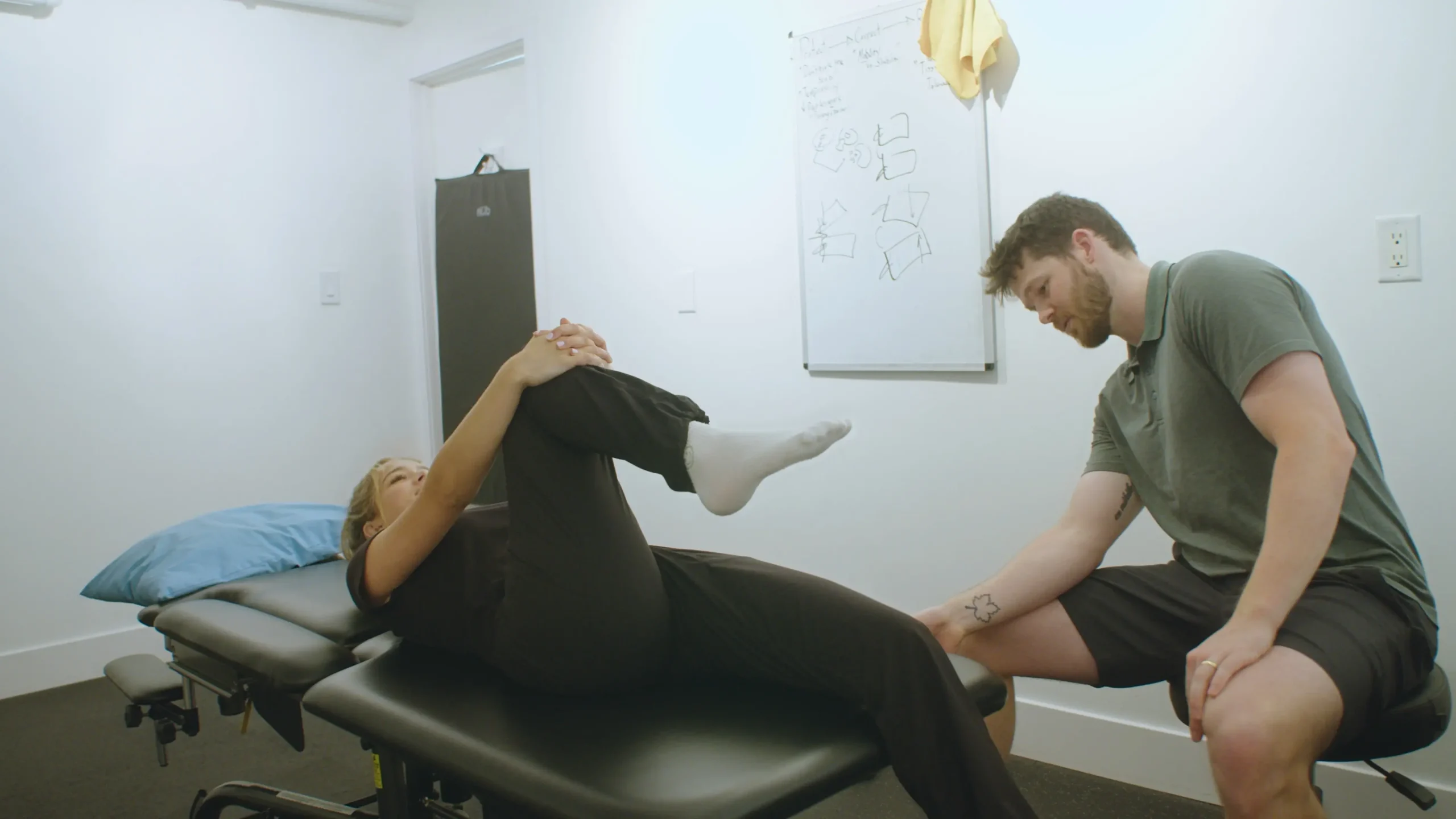
- How to Do It: Lie on your back on a bed or yoga mat with your legs extended. Slowly slide the heel of your operated leg back toward your buttocks, allowing your knee to bend as far as comfortably tolerated. You can loop a bedsheet or towel around your foot to gently assist the pull. Hold the bent position for 3 to 5 seconds, then slowly slide your heel back out until your leg is completely straight.
- Target Repetitions: 10 to 15 controlled repetitions, 2 to 3 times per day.
Stationary Exercise Bike
- Primary Goal: Promote joint mobility, reduce stiffness, and build continuous knee flexion and extension.
- How to Do It: Adjust the bike seat slightly higher than usual so your leg achieves near-full extension at the bottom of the pedal stroke. Begin by slowly pedaling backward. If you cannot complete a full circle, simply rock the pedals back and forth, gently nudging your knee into flexion at the top of the stroke. Once your joint warms up and adapts to the motion, transition to smooth forward rotations.
- Target Duration: 5 to 10 minutes of gentle, non-resisted pedaling.
Sit-to-Stands
- Primary Goal: Build functional quadriceps strength and promote knee flexion into weight-bearing movements.
- How to Do It: Sit near the front edge of a sturdy, high chair with your feet placed flat on the floor, hip-width apart. Tuck your feet slightly back so your knees are bent to roughly 90 degrees. Lean your shoulders forward over your toes and push through your heels to stand up fully, straightening your knees completely at the top. Pause briefly, then slowly lower yourself back down into the chair under control.
- Target Repetitions: 8 to 10 repetitions, focusing on equal weight distribution between both legs.
Double Knee to Chest with a Swiss Ball
- Primary Goal: Provide gentle, assisted knee flexion without placing excessive stress on your thigh muscles.
- How to Do It: Lie flat on your back on the floor or a firm mattress with a large exercise ball (Swiss ball) placed under your lower legs and feet. Slowly roll the ball toward your body by pulling your knees up toward your chest, allowing your knees to bend naturally as the ball moves closer. Use your hands on the back of your thighs to offer light guidance if needed. Pause at your comfortable end-range bend, then slowly roll the ball back out until your legs are straight.
- Target Repetitions: 10 to 12 smooth repetitions.
Restoring Your Mobility in Coquitlam
Recovering from a total knee replacement is a journey that requires patience, consistency, and expert guidance. By focusing on both straightening and bending your knee, maintaining smart resting habits, and staying consistent with your exercises, you set yourself up for long-term surgical success.
Our physical therapy team at Coquitlam Wellness Centre in Coquitlam, BC, specializes in post-operative knee rehabilitation. We provide hands-on care, tailored exercise programs, and swelling management techniques designed to help you regain full confidence in your movement. Contact Coquitlam Wellness Centre today to schedule your post-op assessment and keep your recovery moving forward.